






Salt has long been one of Okinawa’s most essential ingredients, shaped by the islands’ wind, sun and surrounding seas. Across the archipelago, traditional and modern techniques reveal how producers transform seawater into mineral-rich crystals that define local flavors, traditional beauty techniques and health benefits. We explored both methods this month for an experience that was equal parts educational, interactive and surprisingly health-focused.
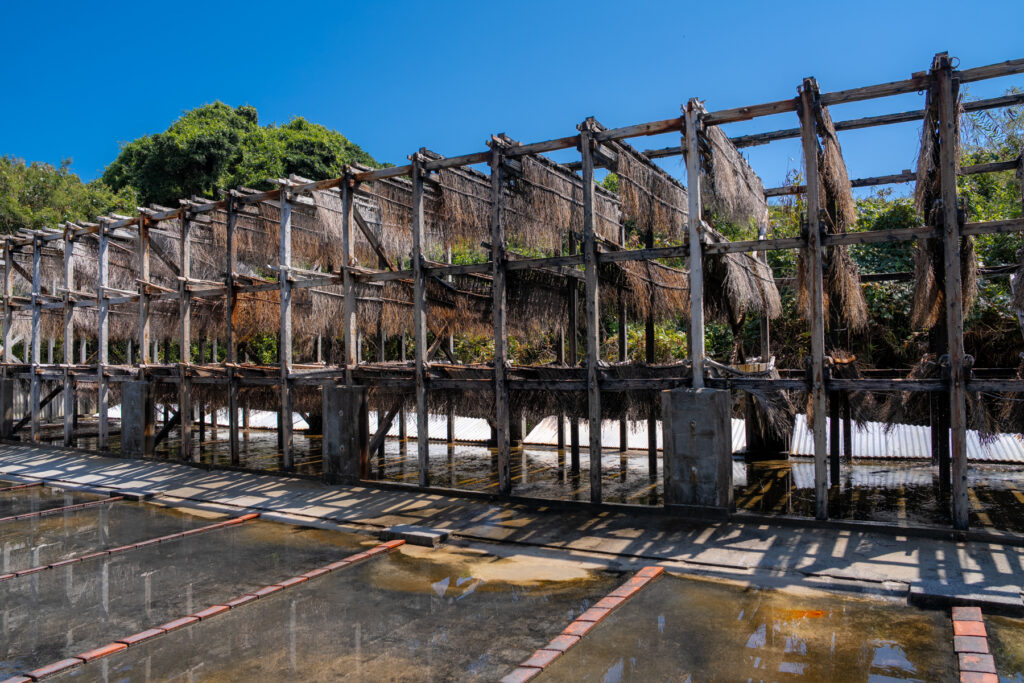
For much of the mid-20th century, salt-making in Okinawa relied on a circulation system designed to gradually concentrate seawater using natural forces. The method, widely used from the 1950s through the 1970s, combined simple engineering with patience and close attention to weather. Seawater was first pumped up during high tide and released across a wooden structure layered with bamboo branches. As the water trickled down through the bamboo, it filtered through a dirt floor lined with red tiles.
The slow movement and steady exposure to air began the evaporation process. From there, the water flowed horizontally through the system before being collected and pumped back to the top to repeat the cycle. Each pass through the structure increased the salinity of the seawater. Over time, the concentration rose from about 4 percent to more than 15 percent. Once the brine reached the desired density, it was transferred to large iron pans known as hiragama, where it was boiled until salt crystals formed.
The process depended heavily on natural conditions. Sun and wind helped concentrate the seawater, while workers carefully monitored the weather to determine when to pump or pause circulation. During Okinawa’s humid summer months, evaporation behaved differently, requiring adjustments to the timing of each cycle.
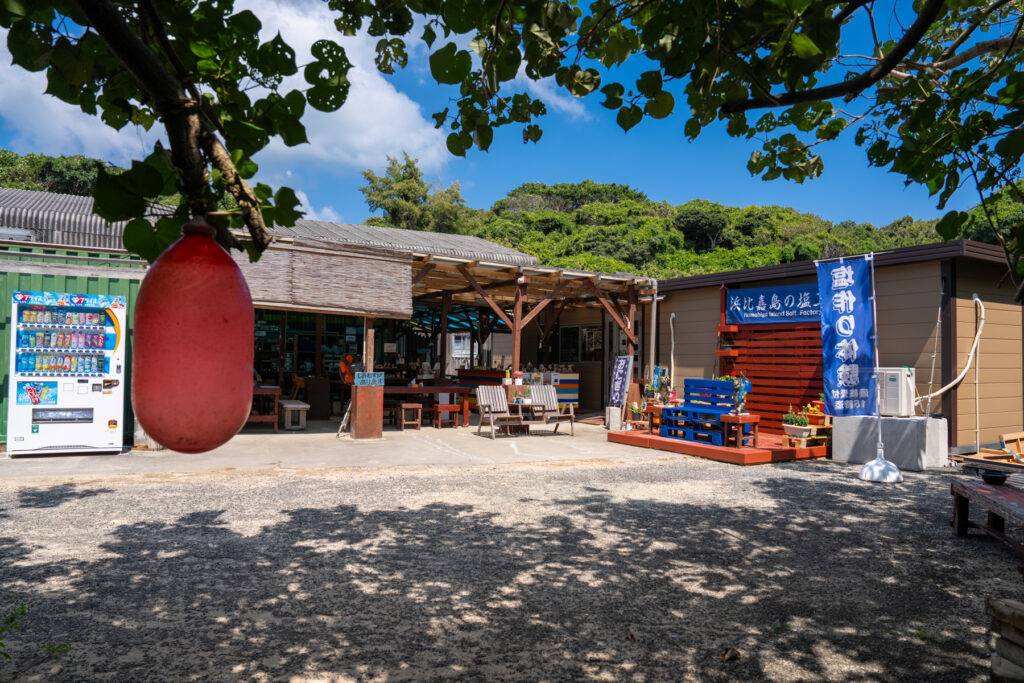
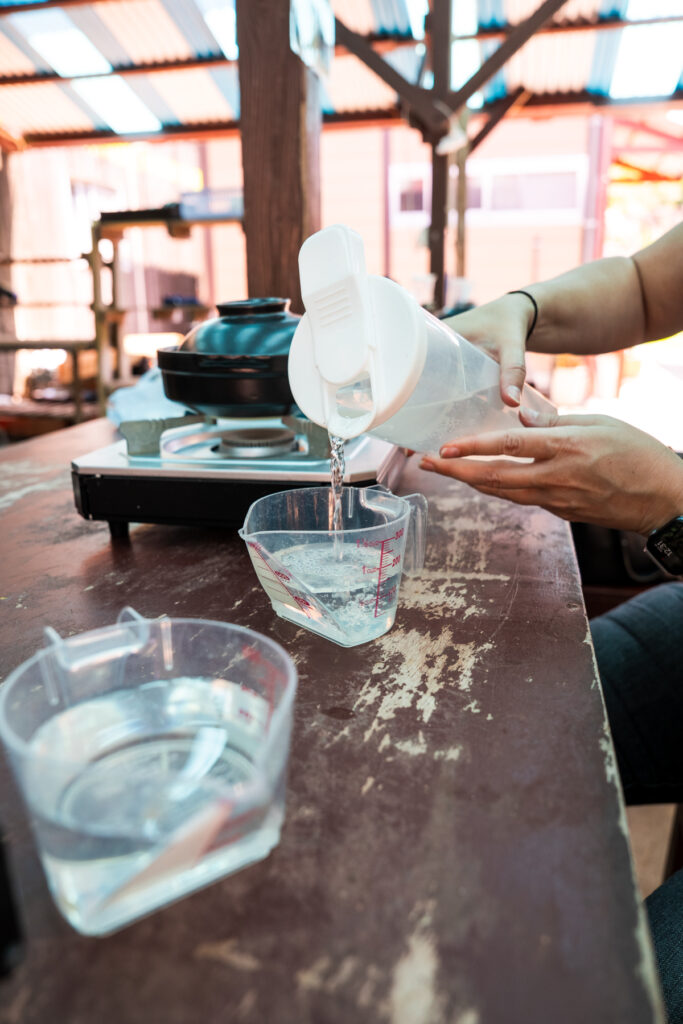
Today, this traditional method survives at a small facility on Hamahiga Island, where visitors can see the historic process in action. At the site, guests can even make their own salt by boiling concentrated brine until the water evaporates, leaving behind delicate crystals. Because the process relies on subtle variations in heat, evaporation and timing, no two batches taste exactly the same. Guides sometimes describe the result with a bit of humor: the salt, they say, takes on the personality of the person making it.
Just across the bridge on Miyagi Island, a very different approach to salt production offers a glimpse of Okinawa’s innovation in the industry. At the saltworks operated by Nuchi Masu, producers focus on preserving the natural mineral balance found in Okinawan seawater.
The process begins with seawater drawn directly from the Pacific Ocean side of the island. Rather than boiling the water or fully evaporating it, the facility uses a technique known as instant air crystallization. Visitors can walk through the factory and observe the process through a series of windows, watching production unfold in real time.
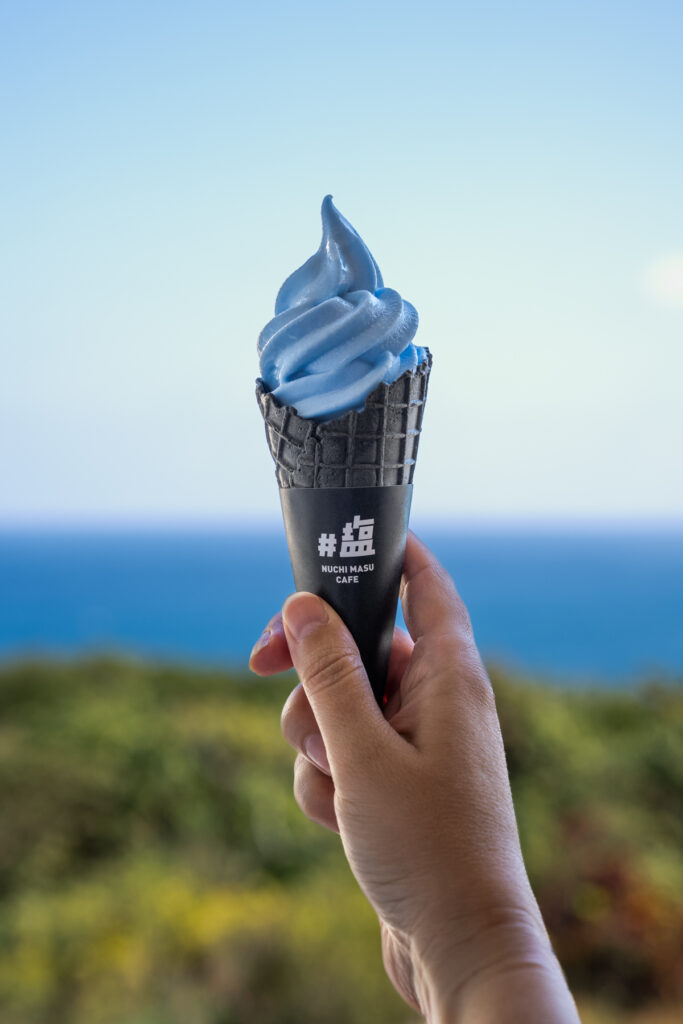
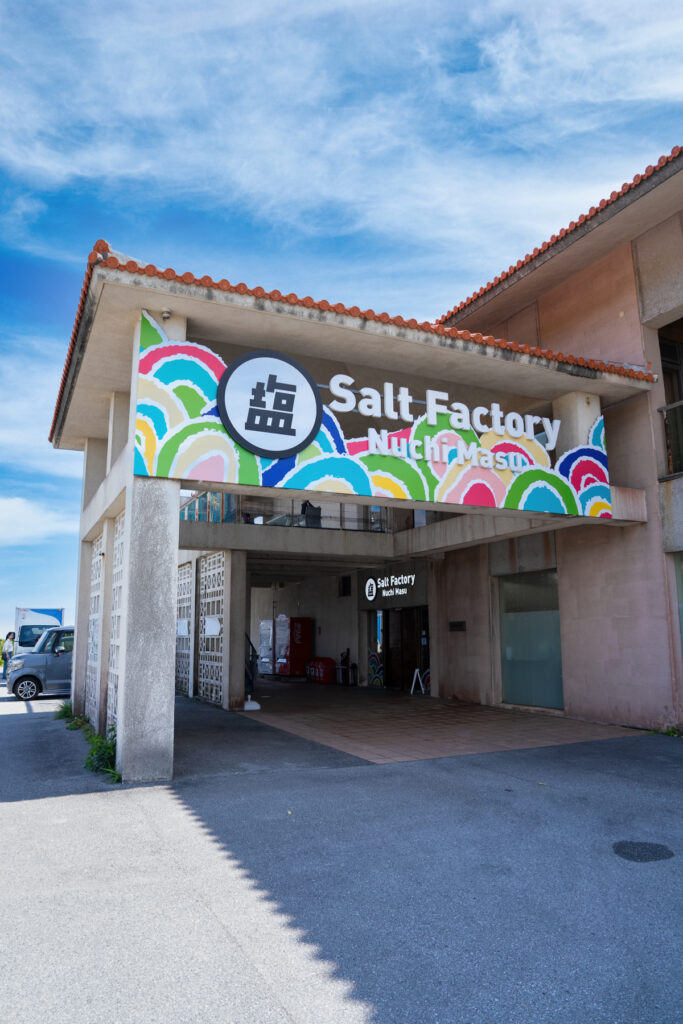
Inside a large chamber, seawater is sprayed into the air as a ne mist while warm air—heated to about 50 degrees Celsius (122 degrees Fahrenheit)—circulates continuously. As the droplets hang in the air, the water quickly evaporates, leaving behind microscopic crystals containing both salt and naturally occurring minerals. The tiny crystals drift downward and collect on surfaces below like ne snow. Workers gather the mineral-rich salt and dry it gently to produce a slightly coarse texture. Additional drying and careful processing can create a finer grain suited for everyday cooking. The technique differs from many conventional salt-making methods, which often separate sodium chloride from other minerals during boiling or full evaporation. By crystallizing seawater in midair, producers aim to retain the trace minerals naturally found in the ocean. After walking through the facility, we stopped for one of the company’s most popular treats: salt ice cream, a cooling reward on a warm Okinawan afternoon. The adjoining shop offered a surprisingly wide range of salt-based products, from culinary salts to skincare items, including a silky bath salt that gently warms when mixed with water. Staff members demonstrated several products and explained their uses while encouraging visitors to test them firsthand.
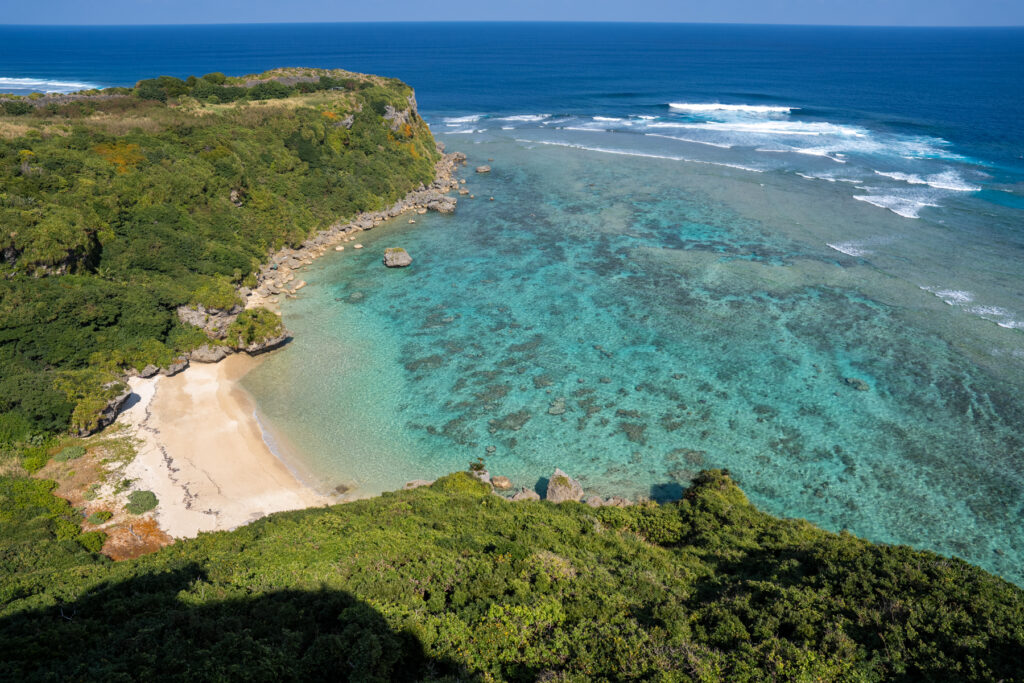
Outside, a short walking path leads to one of the area’s most scenic viewpoints. At Kafu Banta—often translated as “Cape of Happiness”—the cliffs overlook a secluded cove where the seawater used in the factory’s process is drawn through o shore pumps. Sea turtles are known to nest here during full moons, and the shifting shades of emerald and deep blue water make it easy to linger a little longer than planned. After a day exploring both approaches, one thing becomes clear: Okinawa’s salt-making traditions reveal an ever-evolving craft. From techniques guided by wind and sun to modern innovations designed to preserve ocean minerals, salt here is far more than a simple seasoning. It is a reflection of the islands themselves — shaped by nature, sustained by ingenuity and always connected to the sea.