

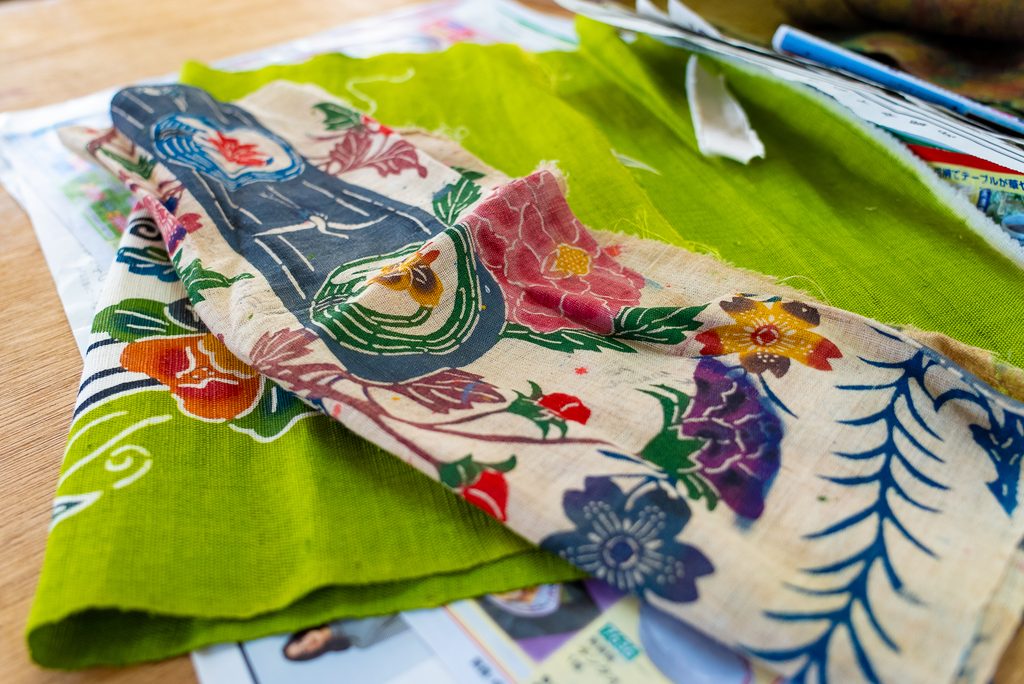
Bingata is one of Okinawa’s most recognizable traditional textile arts, celebrated for its vivid colors, intricate patterns and close connection to the islands’ history. Developed during the Ryukyu Kingdom era, with origins tracing back as far as the 14th century, the art form reflects Okinawa’s distinctive environment and its centuries of cultural exchange. Traditional bingata designs often feature flowers, birds, waves and other elements inspired by the subtropical landscape. Some patterns also reveal influences from China, mainland Japan and Southeast Asia, regions that maintained trade relationships with the Ryukyu Kingdom. Artisans combined those outside influences with local imagery to create a textile tradition unique to Okinawa.
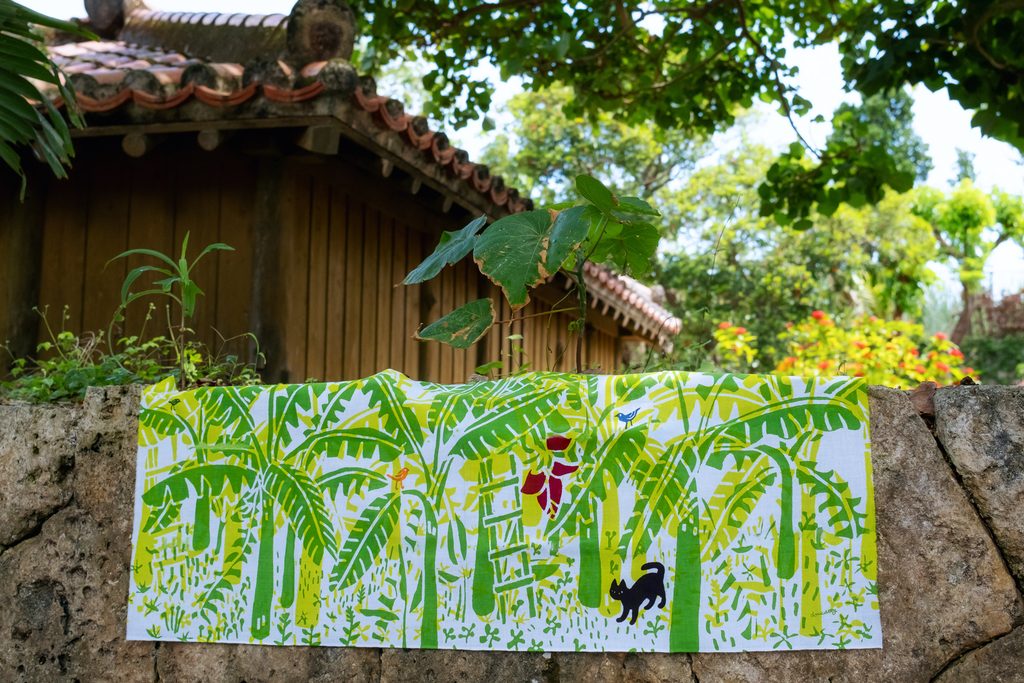
The detailed dyeing process is one of bingata’s defining characteristics.
Artisans traditionally apply a rice-paste resist to a variety of fabrics using hand-carved stencils. The paste protects selected areas while pigments are carefully brushed onto the material. Multiple colors may be layered to add depth, shading, and visual contrast. After the dyes have set, the rice paste is washed away, revealing clean outlines and beautifully detailed patterns beneath.
Historically, bingata was closely associated with the Ryukyuan royal court and aristocracy. Kimono, robes and ceremonial garments were created for members of the royal family and noble households. Colors, materials and patterns could indicate the wearer’s age, gender or social rank. Elaborate designs and high-quality fabrics, such as silk, were generally reserved for those with greater status.
Bingata continues to play an important role in Okinawan culture. Traditional garments are worn during dance performances, cultural festivals, weddings, coming-of-age ceremonies and other formal occasions. The bold patterns are especially striking during performances, where movement brings the colorful designs to life.


Contemporary designers have also introduced bingata into everyday fashion. Traditional patterns now appear on clothing and accessories. The designs are also used on home décor, souvenirs and locally made gifts.
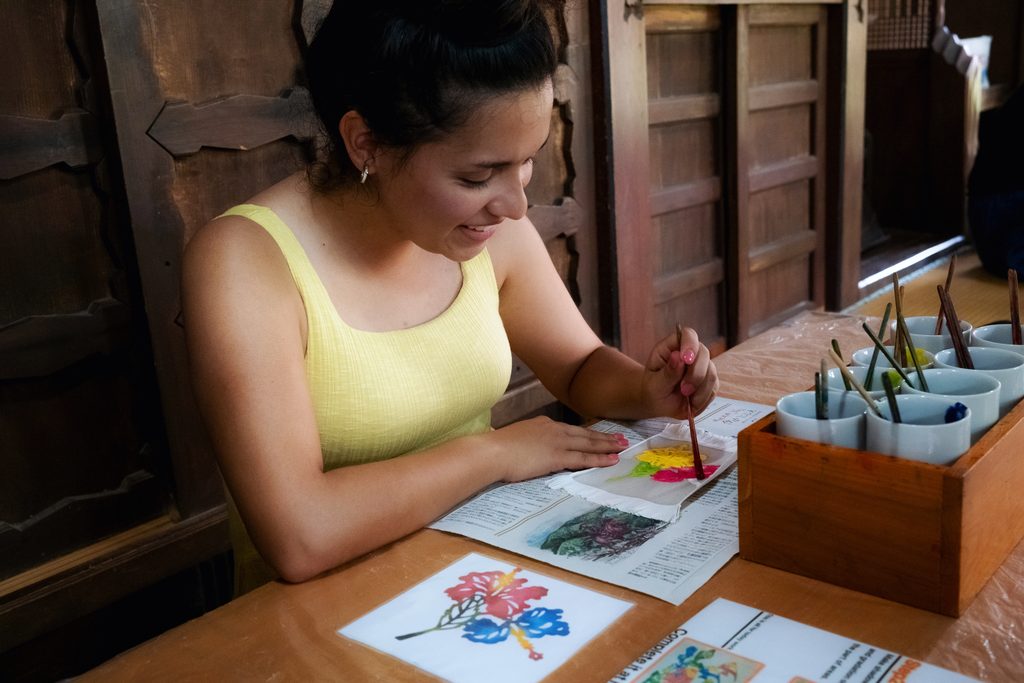
Visitors can take part in the textile art form by attending a bingata workshop. Participants typically choose a prepared design on an item such as a tote bag. An instructor demonstrates how to apply the pigments with a brush, often using small circular motions to work the color into the fabric. Larger designs may take up to an hour to complete. During the painting stage, the piece may appear smudged because the pigments extend beyond the visible outlines and cover areas protected by rice paste. After the paint has dried for about a week, participants wash the textile according to the instructor’s directions, removing the rice paste and revealing the finished design.
Bingata remains more than a decorative art form. It preserves part of the Ryukyu Kingdom’s legacy while allowing new generations to interpret Okinawan culture through clothing, performance and modern design.
You can experience this cultural art firsthand by checking with ITT for any upcoming bingata workshop tours.
Article and photography: Marina Chayka